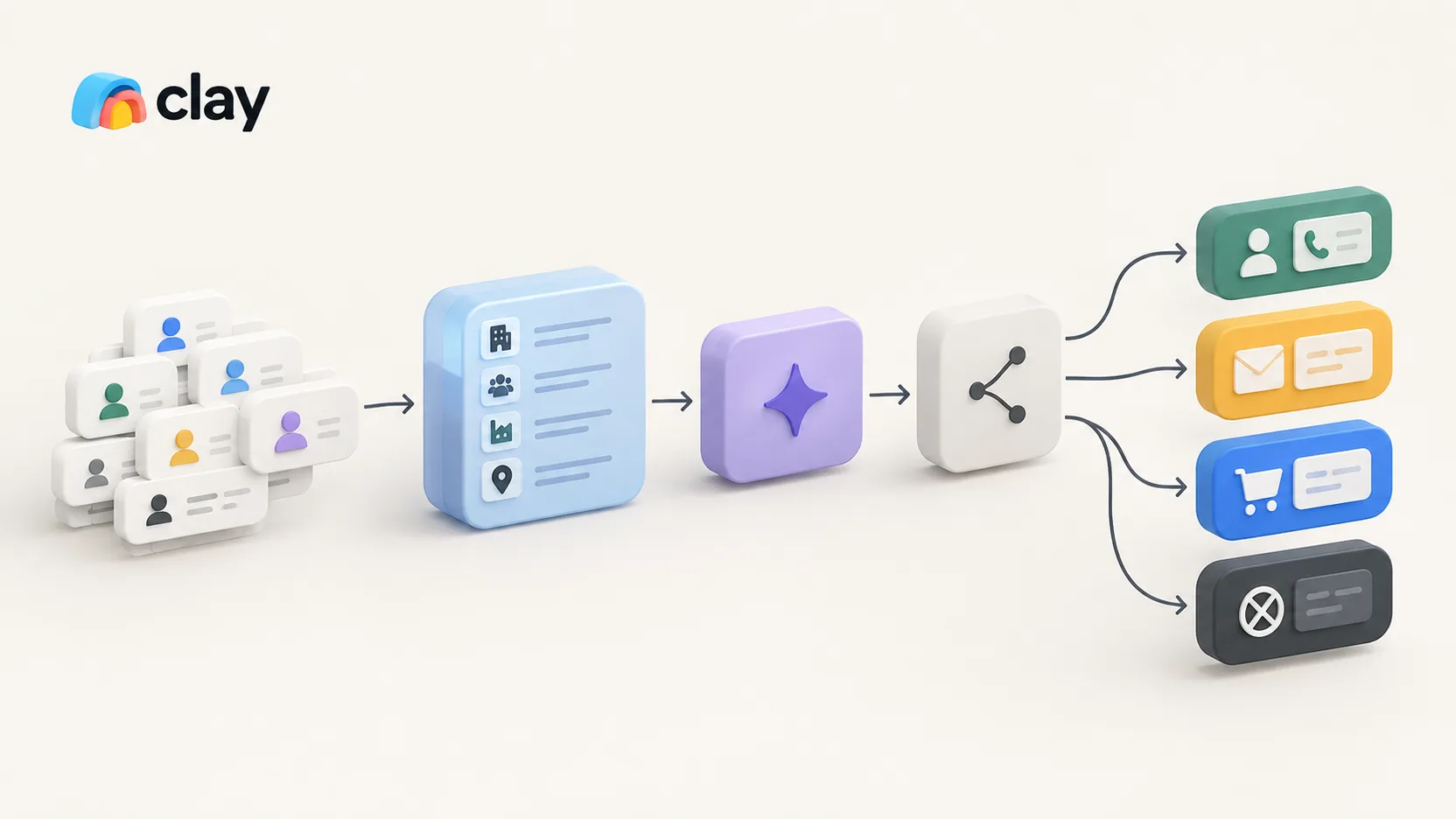
A free-trial motion has a cruel shape. The signups that will pay you look exactly like the signups that never will, right up until someone spends time on them. So the good accounts sit in the same queue as the throwaway ones, and by the time a rep works down to them, the trial is half over and the buyer has moved on.
The instinct is to enrich everyone and let sales sort it out. That is the mistake. Enriching every signup into a full research dossier does not fix the queue, it just makes a slower, more expensive queue. The actual job is smaller and faster: turn each signup into a routing decision in seconds, and only the accounts that clear a real bar ever reach a human.
This is what we build in Clay for free-trial and PLG motions. Here is how it works, what it costs, and the parts people get wrong.
The real problem is routing, not enrichment
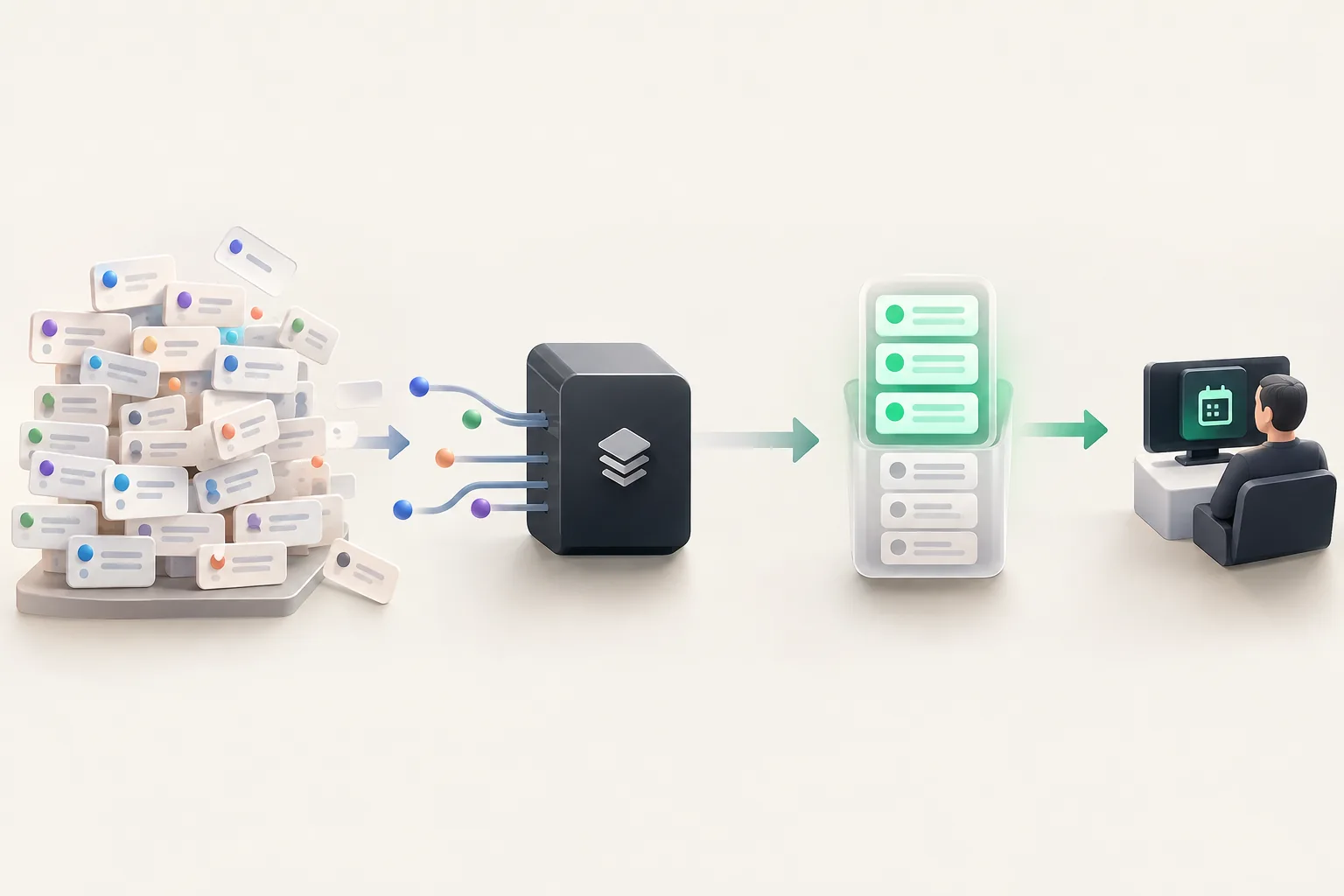
If you pass every enriched signup to sales, you get the outcome you were trying to avoid: reps spend their hours on accounts that were never going to convert, and the genuine high-intent trials wait behind them. Volume becomes the enemy. A routing system exists to protect the AE’s calendar, not to fill it.
So the first design rule is that most signups should never touch a person. They should be scored, filed, and pushed into a self-serve or lifecycle track automatically. Sales only sees the top slice.
The two-axis model: fit times activation
The decision that matters runs on two axes, not one:
- Fit. Is this the kind of company you sell to? That comes from enrichment: company size, industry, headcount, the firmographics that define your ICP.
- Activation. Has this person actually done something in the product? That comes from your product events, not from Clay.
Cross the two and you get four routes:
| Activated in product | Cold in product | |
|---|---|---|
| High fit | AE gets it now | Lifecycle / nurture email |
| Low fit | Self-serve, let the product sell | Ignore or automate fully |
Fit plus activation is the only quadrant that earns a human. Fit but cold goes to lifecycle email, because the account is worth keeping warm but not worth a call yet. Activated but low fit stays self-serve, because the product is already doing the selling and a rep would only get in the way. The point of the model is that the same enrichment data sends different signups to completely different places, and the route gets decided in under thirty seconds, before the user has even finished onboarding.
How Clay does the enrichment part
Fit scoring needs firmographics, and this is where Clay earns its place. Clay uses waterfall enrichment: instead of betting on one data vendor, it queries providers in sequence and stops at the first confident result. If the first provider returns a verified match, Clay uses it and moves on. If not, it tries the next, then the next, across a stack that Clay says reaches more than 150 databases.
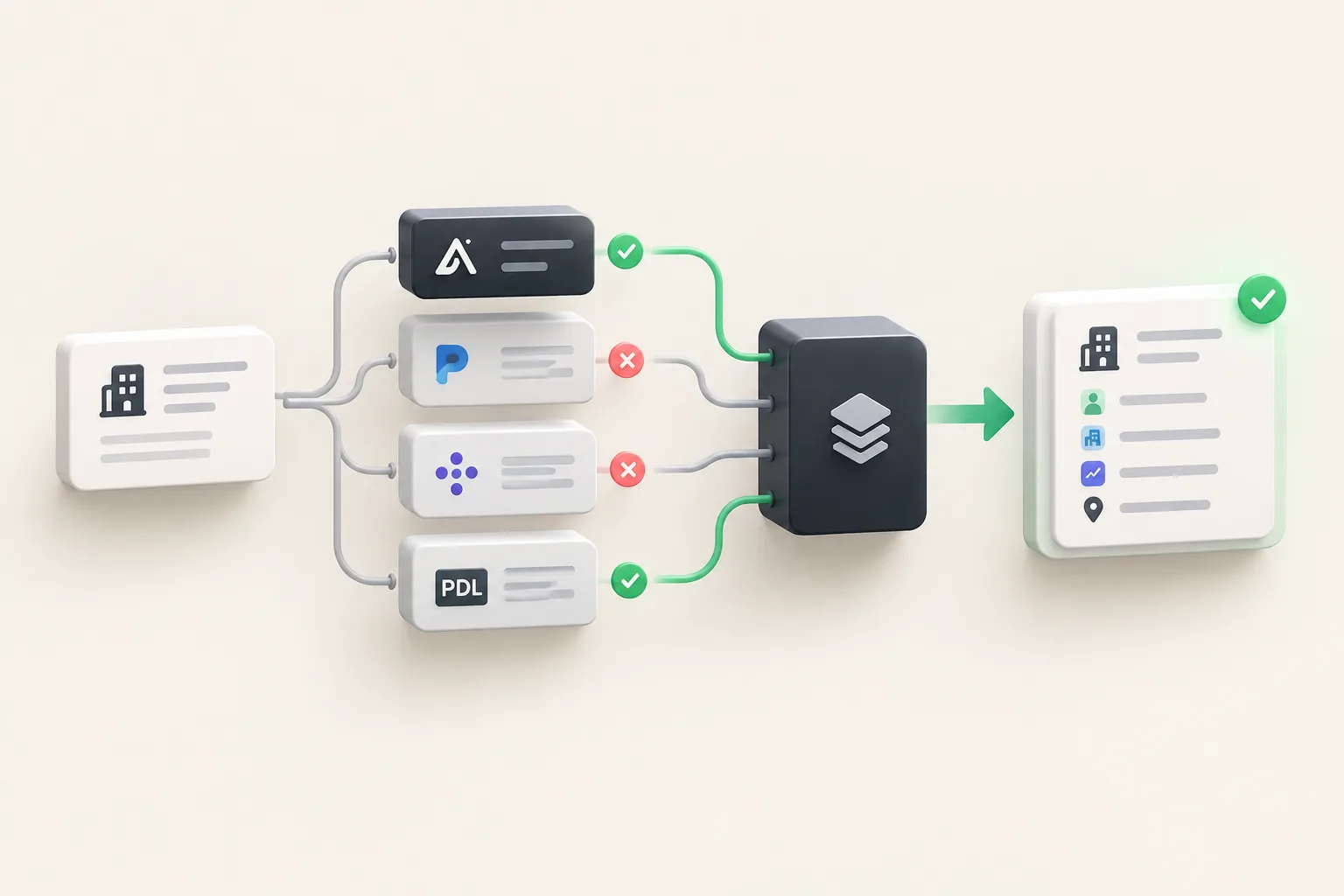
Two things about waterfall matter for a free-trial build:
You are billed for the lookups that run, not for the whole chain. Each record stops at the first confident answer, so a signup whose data the cheapest provider already covers never triggers the expensive ones. Clay runs on two kinds of credit: Data Credits, which pay for the data itself and start at $0.05 each, and Actions, which pay for the platform work and start at under a cent. The cost of any workflow depends on which providers you stack and how deep the chain goes, and the spread between providers is real. Finding an email costs 2 credits through Prospeo, DropContact, Datagma, or Hunter, and 5 credits through People Data Labs. That difference, multiplied across every signup, is the whole argument for ordering the chain carefully. For the full picture of what enrichment costs across tools, see our guide to data enrichment API pricing.
Order is the whole game. The model only saves money if the cheapest, most reliable provider sits first and the expensive long-shot sits last. Get the order wrong and you pay premium rates on records a cheaper source would have covered. For work-email and company data, the provider pool Clay draws from includes names like Apollo, People Data Labs, Prospeo, Hunter, Datagma, and Lusha, and the right first choice depends on your ICP’s geography and company size, not on a default. We break down when to reach for each in Clay vs Apollo vs ZoomInfo.
For a trial signup, you also do not need the deep chain. You need enough to make a fit call, which is usually company identity, size, and industry from the domain. Save the full waterfall for accounts that already cleared the fit bar and are heading to a rep.
The end-to-end workflow, under a minute
Here is the shape of the system we run for a free-trial motion:
- Signup fires a webhook. A new trial signup, from your product or a HubSpot form, lands in Clay within about thirty seconds. Speed here is the point of the whole build.
- Clay finds the company by domain. It resolves the work email to a company and pulls size, industry, and headcount from a provider like Apollo or People Data Labs.
- An AI step scores fit against your ICP. You define the ICP once, in plain language, and the scoring step grades each account against it.
- The route is decided. Fit score meets your product-activation signal, and the signup drops into one of the four quadrants.
- Hot leads ping the AE in Slack fast. A high-fit, activated signup should hit the AE channel within about ninety seconds, while the trial is live and the buyer is still in the product.
- The CRM is written either way. Every signup creates or updates its record with the enrichment and the score, so nothing is lost even when nobody is pinged.
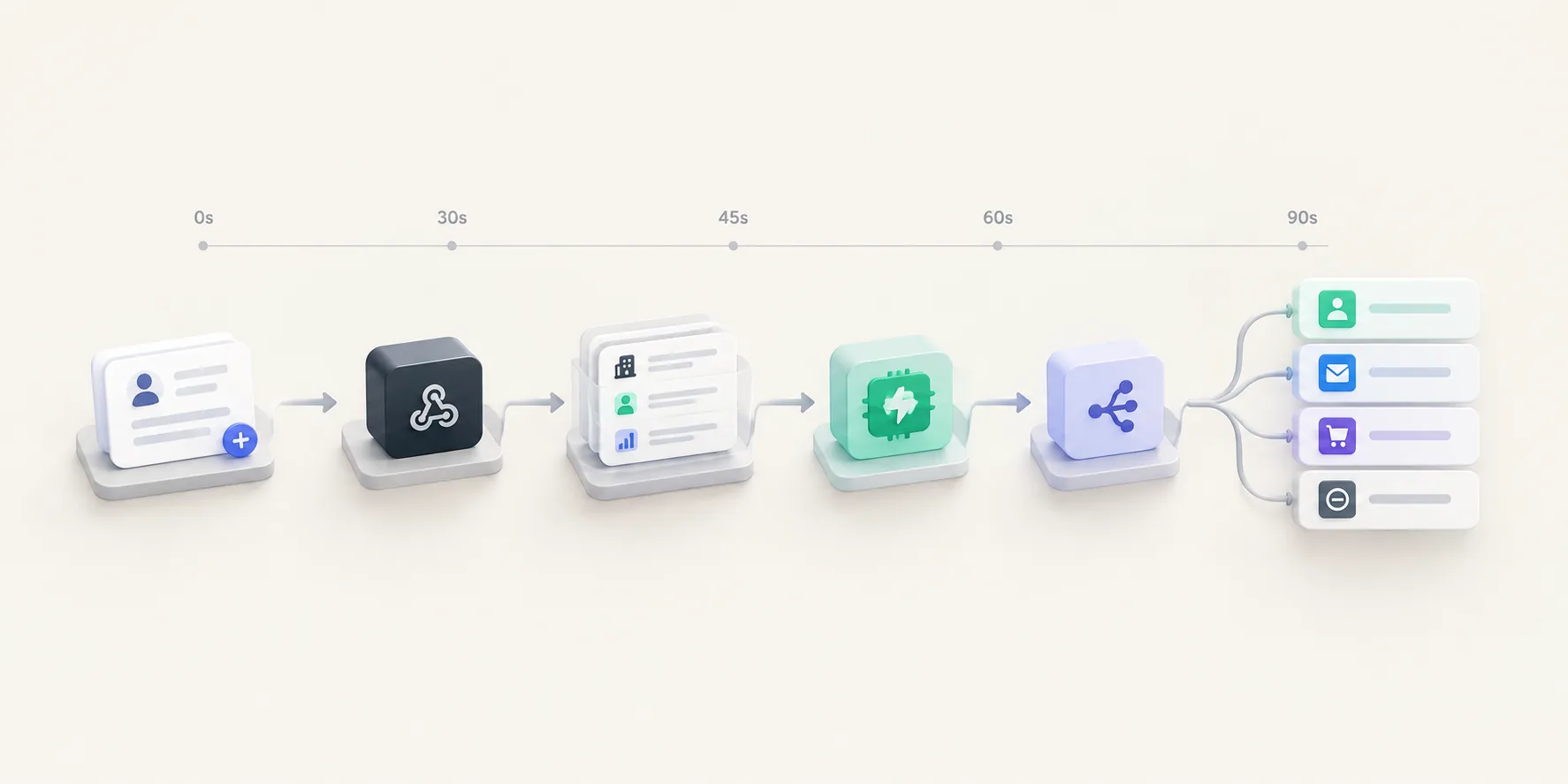
The best inbound systems complete the enrich, score, and route loop in under sixty seconds. That number is not a vanity metric. On a free trial, fit-and-activated accounts should reach sales on day one to day four, while there is still time to influence the decision. A routing system that takes a day to run has already missed the window it exists to catch.
What we actually do differently
A few operator habits separate a routing system that holds up from one that quietly bleeds money:
- Do not over-enrich trials. You are making a routing decision, not writing a dossier. Pull the minimum to score fit, and reserve the deep enrichment for accounts that already earned a rep.
- Cache aggressively. If the same domain shows up twice inside thirty days, pull from cache instead of re-enriching and re-paying. On a high-volume free trial the duplicate rate is higher than people expect, and this alone can move the credit bill.
- Protect the queue on purpose. Not every enriched signup deserves a call. The bar for reaching an AE should be high enough that the AE trusts the queue, because a queue full of weak leads gets ignored, and then the good ones get missed too.
- Send a morning digest, not just real-time pings. Alongside the ninety-second alert for hot leads, a summary that fires each morning covering the last twenty-four hours of a rep’s leads keeps the slower-burn accounts from vanishing.
The mistakes that cost the most
Three failure modes show up again and again when we take over an existing setup:
Wrong waterfall order. The chain is technically working, so nobody looks at it, and meanwhile it is calling a premium provider on records a two-cent source already had. The fix is boring: order the chain cheapest-first and check the coverage each provider actually contributes.
Enriching before scoring, on everyone. Teams run the full enrichment on every signup and then decide who matters. Flip it. Score fit on the cheapest possible data first, then only deep-enrich the accounts that pass.
Routing everyone to sales. The most common one, and the most expensive, because it wastes the scarcest resource you have, which is a rep’s attention. If sales sees every signup, the system has failed at its one job.
The takeaway
Enriching free-trial signups is not a data project, it is a routing system with an enrichment step inside it. Clay is the right engine for the enrichment and the routing logic, because waterfall coverage plus per-lookup billing plus real-time webhooks is exactly the shape this problem needs. But the leverage is in the decisions around it: score fit on cheap data first, cross it with real product activation, and let only the fit-and-activated slice reach a person, fast, while the trial is still live.
Tidalstead build these systems for SaaS teams running free-trial and PLG motions, the kind of GTM engineering work that lives in your stack rather than in a slide deck, and the infrastructure stays with you when we are done. We have run enrichment and qualification at this scale before, screening more than 10,000 candidates a day for a Fortune 500 recruiting pipeline. If your trial queue is full and your reps still cannot find the accounts worth calling, that is the problem this solves.
Sources:
- Clay waterfall enrichment (sequential lookup, stops at first confident result, billed per lookup, 150+ databases): https://www.clay.com/guides/waterfall-enrichment and https://www.clay.com/waterfall-enrichment
- Waterfall provider pool and cheapest-first ordering / overpay risk: https://www.clay.com/guides/waterfall-enrichment and https://www.clay.com/waterfall-enrichment
- Two-axis fit x activation routing, four routes, decided in under 30s, hot leads Slack ping within 90s, day 1-4 timing, skip deep enrichment for trials, cache 30 days, do not pass all leads: https://withlantern.com/agents/enrich-plg-signups and https://domainenrich.com/resources/qualifying-free-signups
- Clay inbound workflow (webhook within 30s, domain resolve via Apollo/PDL, AI ICP scoring, route, CRM upsert, morning digest): https://www.clay.com/guides/how-to-automate-inbound-lead-qualification
- Enrich-score-route loop under 60 seconds: https://gtmeagency.com/blog/inbound-lead-routing
- Clay credits model (Data Credits from $0.05, Actions under $0.01, cost depends on providers stacked): https://www.clay.com/faq/what-are-clay-credits-and-how-do-they-work and https://www.clay.com/pricing
- Per-provider credit cost (email lookup: 2 credits via Prospeo/DropContact/Datagma/Hunter, 5 via People Data Labs): https://www.clay.com/faq/which-actions-cost-credits-or-are-free