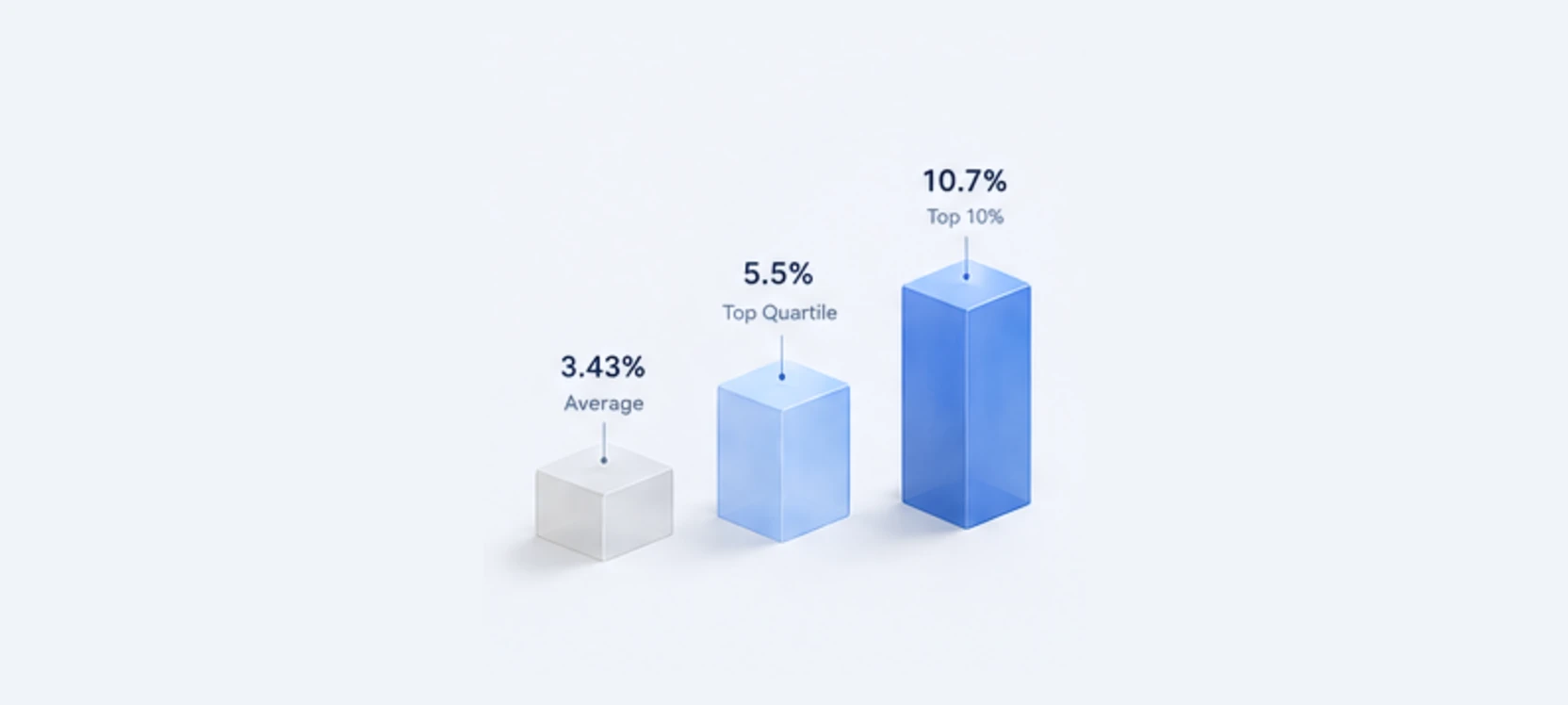
The average cold email campaign gets a 3.43% reply rate. The top 10% of senders clear 10.7%. That is not a small gap, it is a 3x gap, and it is not luck. The teams on the right side of it make a handful of decisions the rest skip, and none of them are secret.
Here is what actually separates a sequence that gets replies from one that gets ignored, with the numbers behind each call, and the parts we have learned the hard way running cold email as a service.
The bar you are actually clearing
Start with honest benchmarks, because most “good reply rate” claims are fantasy. Across platforms the average sits at 3.43%. The top quartile clears 5.5%. The top 10% passes 10.7%. A genuinely good 2026 reply rate is in the 8 to 12% range, and anything above that is either a very warm list or a very tight niche.
Write those down before you start, because they tell you the truth: if your sequence is returning 1 to 2%, you do not have a copy problem, you have a system problem, and no amount of subject-line tinkering fixes it.
Length and cadence: 4 to 7 steps, spaced to breathe
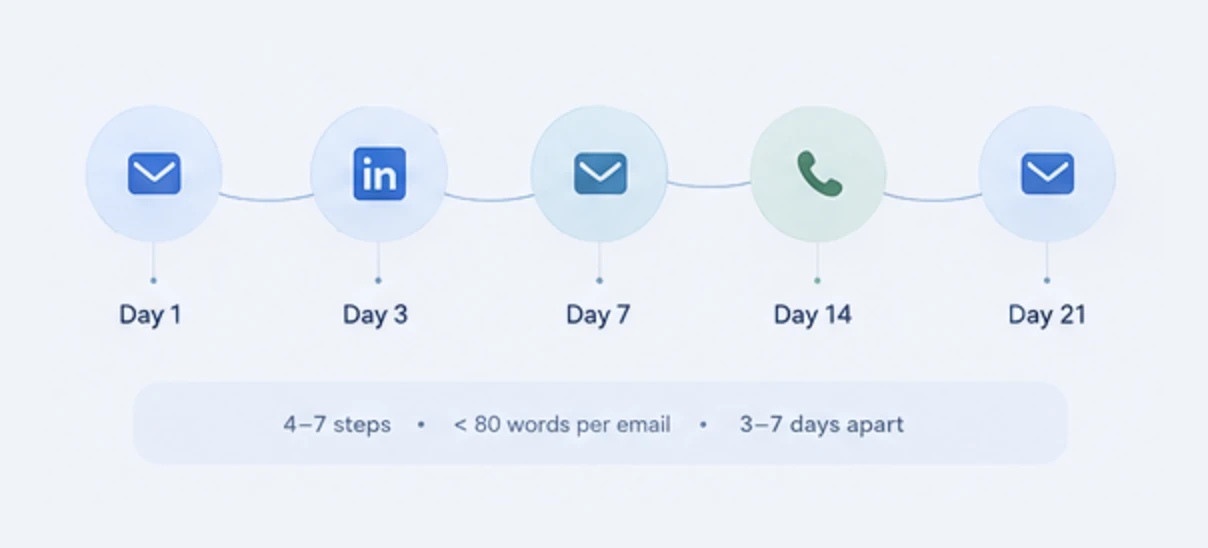
The most effective sequences run 4 to 7 steps, keep each email under 80 words, and space the touches 3 to 7 days apart. A clean five-touch cadence widens as it goes: days 1, 3, 7, 14, 21. The widening matters, because bunching emails together reads as desperate and hammers your deliverability at the same time.
The follow-up math is the part people underuse. The first email captures 58% of all the replies a sequence will ever get. The other 42% come from the follow-ups. Send your first follow-up 3 to 4 days after the opener, because waiting longer than 5 days cuts your response likelihood by 24%. Half of your results are sitting in follow-ups most teams never send, or send too late.
If you only take one structural rule from this: a single email is not a campaign. Neither is a single email plus one lazy “just bumping this to the top of your inbox.”
The 50% rule: stop making it all email
Here is a habit that quietly lifts reply rates: no more than half the steps in a sequence should be emails. Build a ten-step sequence and only five should hit the inbox. The rest are non-inbox touches, a LinkedIn view or comment, a call, a connection request.
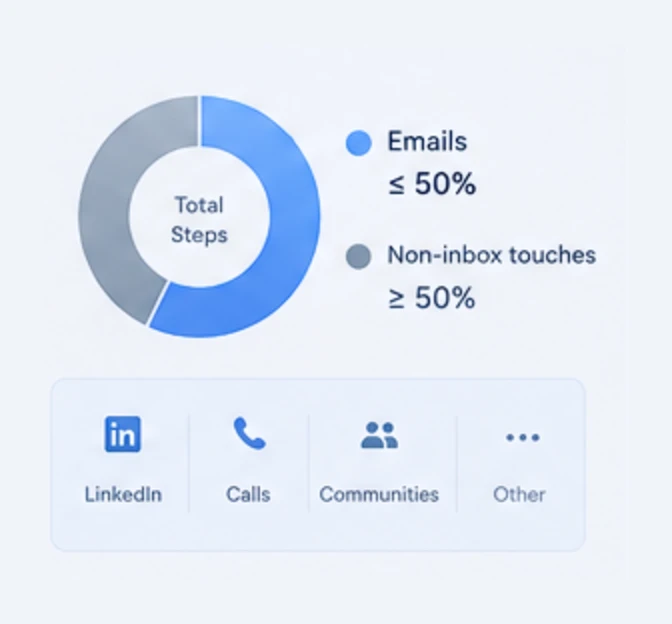
A prospect who has seen your name on LinkedIn before your third email opens it as someone they half-recognize, not a stranger. That multichannel context is a big part of what AI outbound sales motions are built to coordinate.
Personalization is the lever, and the data is not close
If length and cadence are the frame, personalization is the engine. The numbers are stark. Advanced personalization, the kind built on real company-specific research, pushes reply rates to 17 to 18%, against roughly 9% for basic templates. Personalized email bodies alone see a 32.7% higher response rate. And the sharpest cut of all: signal-based cold emails, ones tied to something that just happened at the account, land 5 to 18% replies, while generic outreach with no signal typically manages 1 to 3%.
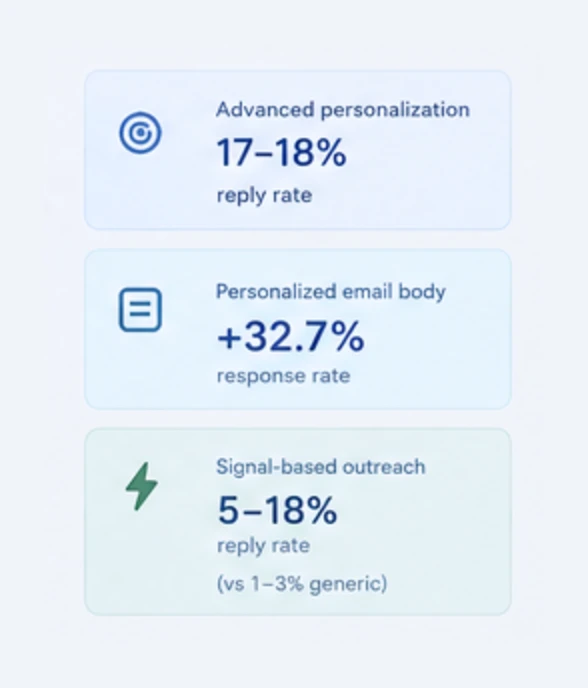
Read that last one again. The difference between a dead campaign and a top-decile one is often not the writing, it is whether the email is anchored to a real, timely reason to be reaching out right now. That is the whole thesis behind signal-based outbound, and it is why we spend more time on the trigger than on the template.
Personalization at this level does not mean writing 500 emails by hand. It means building the research and the signal detection into the system so every email carries a specific, true reason it was sent. Done right, it scales.
None of it lands if you are in spam
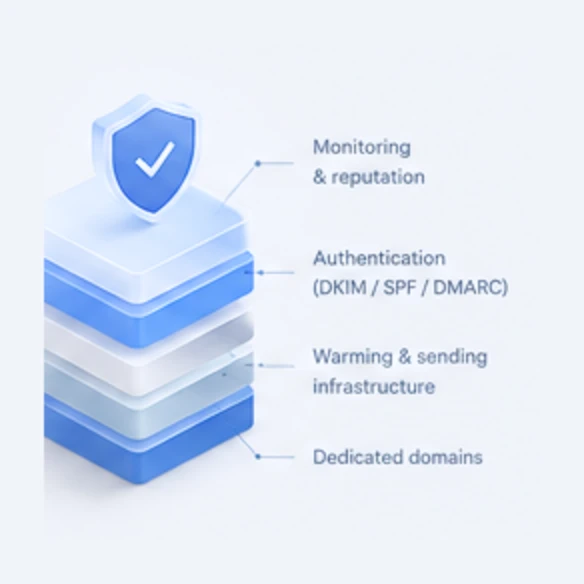
A perfect sequence to a dead inbox returns zero. In 2026 that risk is higher than it has ever been, because Google, Yahoo, and Microsoft moved their sender rules from “spam folder” to outright rejection, and a domain with weak authentication or a rising complaint rate can have mail refused before it arrives anywhere. Deliverability is now the gate that decides whether any of the above matters, and it is a system in its own right: separate sending domains, authentication, warming, and complaint monitoring. We go deep on it in cold email deliverability in 2026. Treat it as the foundation, not an afterthought, because a top-decile sequence in the spam folder is still a 0% sequence.
What this looks like when it works
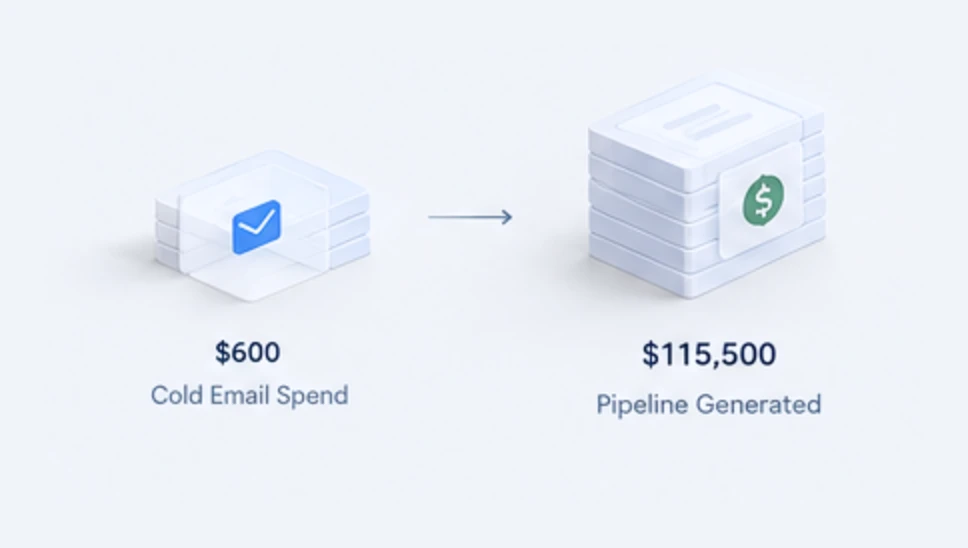
We build and run these systems, and two results show the range. We turned $600 of cold email into $115,500 in pipeline for a client, which happened because the deliverability and the sequence were built as one thing rather than bolted together, the full breakdown is here.
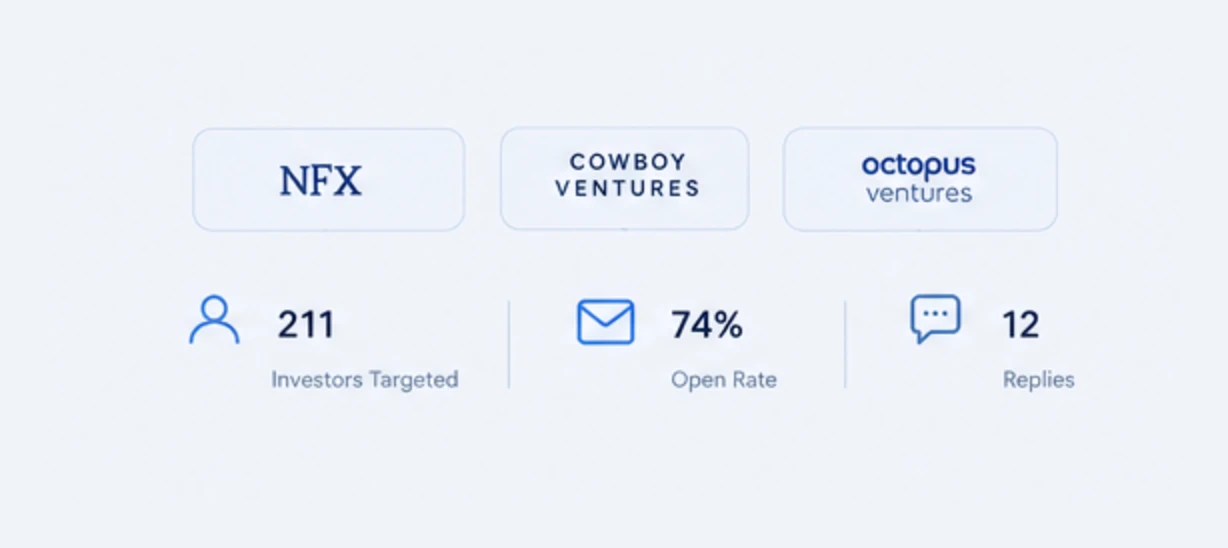
And on a cold investor campaign, we hand-picked 211 investors and got a 74% open rate and 12 replies, including funds like NFX, Cowboy Ventures, and Octopus. Twelve replies from 211 cold contacts is past the top-quartile reply mark, and it came from tight targeting plus a real reason each fund was contacted, the investor campaign is written up here.
Neither result came from a clever subject line. They came from treating cold email as a system: deliverability first, a sequence structured to use follow-ups, and personalization tied to a genuine signal.
The takeaway
A sequence that gets replies in 2026 is 4 to 7 steps on a widening cadence, uses its follow-ups because that is where 42% of replies live, keeps at least half its touches off the inbox, and anchors every message to a real signal rather than a template. Underneath all of it, deliverability has to be handled as its own build. Get those right and the top-decile 10%+ reply rate stops looking like luck. It is what a well-engineered system returns. This kind of end-to-end build is what GTM engineering actually is, and it is the work we do.
Sources:
- Reply rate benchmarks (average 3.43%, top quartile 5.5%, top 10% 10.7%; good rate 8-12%): https://instantly.ai/cold-email-benchmark-report-2026 and https://whali.com/blog/cold-email-response-rates-benchmarks
- Sequence length and cadence (4-7 steps, under 80 words, 3-7 day gaps, widening cadence days 1/3/7/14/21): https://instantly.ai/blog/cold-email-sequence-best-practices/ and https://www.allegrow.co/knowledge-base/cold-email-sequences
- Follow-up math (first email 58% of replies, follow-ups 42%; first follow-up 3-4 days; waiting >5 days cuts response likelihood 24%): https://instantly.ai/cold-email-benchmark-report-2026 and https://martal.ca/b2b-cold-email-statistics-lb/
- The 50% rule (no more than half the steps should be emails; rest are non-inbox touches): https://expandi.io/blog/email-sequence-outreach/ and https://www.allegrow.co/knowledge-base/cold-email-sequences
- Personalization impact (advanced 17-18% vs basic ~9%; personalized body +32.7%; signal-based 5-18% vs generic 1-3%): https://www.autobound.ai/blog/cold-email-guide-2026 and https://instantly.ai/cold-email-benchmark-report-2026
- 2026 deliverability enforcement (Google/Yahoo/Microsoft moved from spam folder to rejection): https://leadhaste.com/blog/email-deliverability-2026-changes
- Tidalstead results: internal case studies (six-hundred-dollar-campaign; tier-1-vc-access, 211 investors, 74% open, 12 replies incl NFX/Cowboy/Octopus).